
Urban Hack in Lviv
Topic - Holistic Renovation of Modernist Housing
Urban Hack Lviv focuses on the topic of “Holistic Renovation of Modernist Housing” and will have a closer look at a microdistrict in Sykhiv district in Lviv. The microdistrict is located between Chervonoi Kalyna Avenue and Oleksandra Dovzhenko Street.
Renovation is a larger topic that almost every country in Europe is currently tackling. With Holistic Renovation of Modernist Housing we are looking for a comprehensive approach to housing renovation that considers various aspects such as spatial quality, social impact, process quality, economic impact, technical quality, and environmental impact, so that amid rushed need, we would not lower the quality of our neighborhoods. With this topic, we aim to look for solutions to create livable, sustainable, and thriving communities.
Holistic Renovation of Modernist Housing aims to meet contemporary standards of comfort, energy efficiency, safety, and social use, while respecting and preserving their architectural integrity. It involves looking beyond just superficial fixes and considering the building as a whole: its design, structure, systems, and its role in the community. This topic is also a research project lead by Architects Association Lithuania in collaboration with Kharkiv School of Architecture that is investigating roadblocks regarding renovation and hoping to offer a toolbox of solutions.
In the neighborhood in focus (https://maps.app.goo.gl/jH31c4X6Bcp6zxMx9) are a lot of challenges specific to the area that are quite common in typical soviet mass produced housing areas. The main challenge is the lack of feeling of ownership created by the vast area of public open space with no private or semi private zones. So how do we create a feeling of ownership and community in no man's land? Other challenges in the area are lack of activities or meaning given to certain spaces, no universal design and accessibility, poor infrastructure for kids and low feeling of safety.
We believe that if residents, municipal officials, and interdisciplinary teams are involved in modeling the renovation of a modernist mass construction neighborhoods, it is possible to create a realistic foundation for a municipal program to upgrade outdated housing. The hackathon will serve as a lab for developing a first draft framework adaptable to different funding sources and various levels of intervention.
This Urban Hack will, as usual, have 5 teams that will have a look at the renovation process challenges from different angles, next to visual ideas. All teams are dealing with one umbrella task of renovation challenges, but every team can choose a more specific viewpoint. We can view the issues from the perspective of the residents, homeowners association, local municipality, financial means and partnerships with donors. With this Hack we aim to empower everyone to take control over their own environment and think outside the box of restrictions and can’t do’s.
Urban Hack Format
Urban Hack is a tested format for participatory planning and local development using a multi-stakeholder approach. During the Urban Hack, a diverse set of local stakeholders (municipal politicians, architects, developers, entrepreneurs, representatives of state agencies and the local community) come together to discuss local contested spatial issues, build trust between stakeholders, and make concrete joint proposals for improving the common living environment. The results of Urban Hack are always non-binding.
The fast paced nature of the Hack allows for visionary illustrations and rapid prototyping of developing scenarios for a particular territory. The final product may vary – sketches and drawings in presentation format, a brief for an architectural/urban planning competition, a Youtube video recording or a series of radio shows. However, the final result will include visualisation for Lviv City and recommendations for action.
The Urban Hack is organized by the Estonian Association of Architects, NGO Ro3kvit Urban Coalition for Ukraine, in cooperation with Architects Associaton of Lihtuania, Kharkiv School of Architecture and the city of Lviv. The hack is part of a series of 4 Urban Hacks in Ukraine within the scope of the European cultural project “UREHERIT”, funded by the European Union, with additional funding from ESTDEV – Estonian Centre for International Development, Republic of Estonia Ministry of Culture and Swedish Institute.
Who are we looking for?
Are you a housing association (OSBB) manager, an architect, urbanist, urban activist, specialists who deal with the development of housing associations; visual artist, Lviv local, IDP living in Lviv, architecture student or just interested in inclusive methods for urban planning? Then we are looking for you! This call is open for potential participants as well as team leaders. In addition, for every team, we are looking for someone with visualization skills that can do magic with pen and paper, computer renderings or even digital collage.
Participation in the Urban Hack is voluntary, and participants’ possible expenses are not reimbursed, but there are options to find funding for participating. All participants will get 3 days full of great discussions, new professional contacts, additions to their personal portfolio and a say in the future of the city and its neighborhoods.
Agenda
13 June | Friday
Pre-event
10:00 Site visit
https://maps.app.goo.gl/jH31c4X6Bcp6zxMx9
Participation in pre-event day is optional
14 June | Saturday
Day 1
09:00 — Coffee and registration
09:30 — Welcome - Moderator | Mae Köömnemägi
09:40 — Opening words |
09:50 — UREHERIT project introduction | Ruta Leitanaite
10:00 — Opening words | Mykhailo Shevchenko
10:10 — Topic Holistic Renovation of Modernist Housing | Martynas Marozas
10:20 — Estonian pavilion in Venice | Elina Liiva
10:30 — What is Urban Hack | Ülar Mark, Mae Köömnemägi
10:40 — Brief | Mariia Ufimtseva
11:00 — Introduction to team leads | Moderator
11:10 — Start of group work: Divide into groups
13:00 — Small lunch at the venue
14:00 — Start of group work: Analyse the material and describe the challenges
17:00 — Small presentations
18:00 — End of day 1
18:30 — Dinner and informal networking
15 June | Sunday
Day 2
09:00 — Coffee and arrival
09:30 — Continuation of group work
13:00 — Lunch
14:00 — Group work: Finalise presentations
17:00 — Group 01 presentation of ideas and outcome
17:15 — Group 02 presentation of ideas and outcome
17:30 — Group 03 presentation of ideas and outcome
17:45 — Group 04 presentation of ideas and outcome
18:00 — Group 05 presentation of ideas and outcome
18:15 — Reflection session
19:00 — Closing words | Moderator
19:15 — End of the day (free time)
Team Leads

Paco Ulman
Urban planner, Exhibition curator, Architect
Since 2001 has worked as an architect in various offices (Ars Projekt, AB Kosmos, Arhitektuuriagentuur, Alliance Architects). Co-founded Mudel Architects in 2013.
Since 2018 has worked in Tallinn as an architect in the City Planning Department.
In his artistic activities, he mainly deals with spatial issues and its representation, using a variety of media to do so. Some solo exhibitions: "Heitmaa" 2018, "In Tallinn" 2009 and "Mememe" 2014a.
Has designed exhibitions, installations, graphics, directed short films and animations, drawn graphic novels, etc.
Since 2011 has supervised various studios at EKA. Since 2021, PhD student at the Department of Architecture and City Planning at the Estonian Academy of Arts.
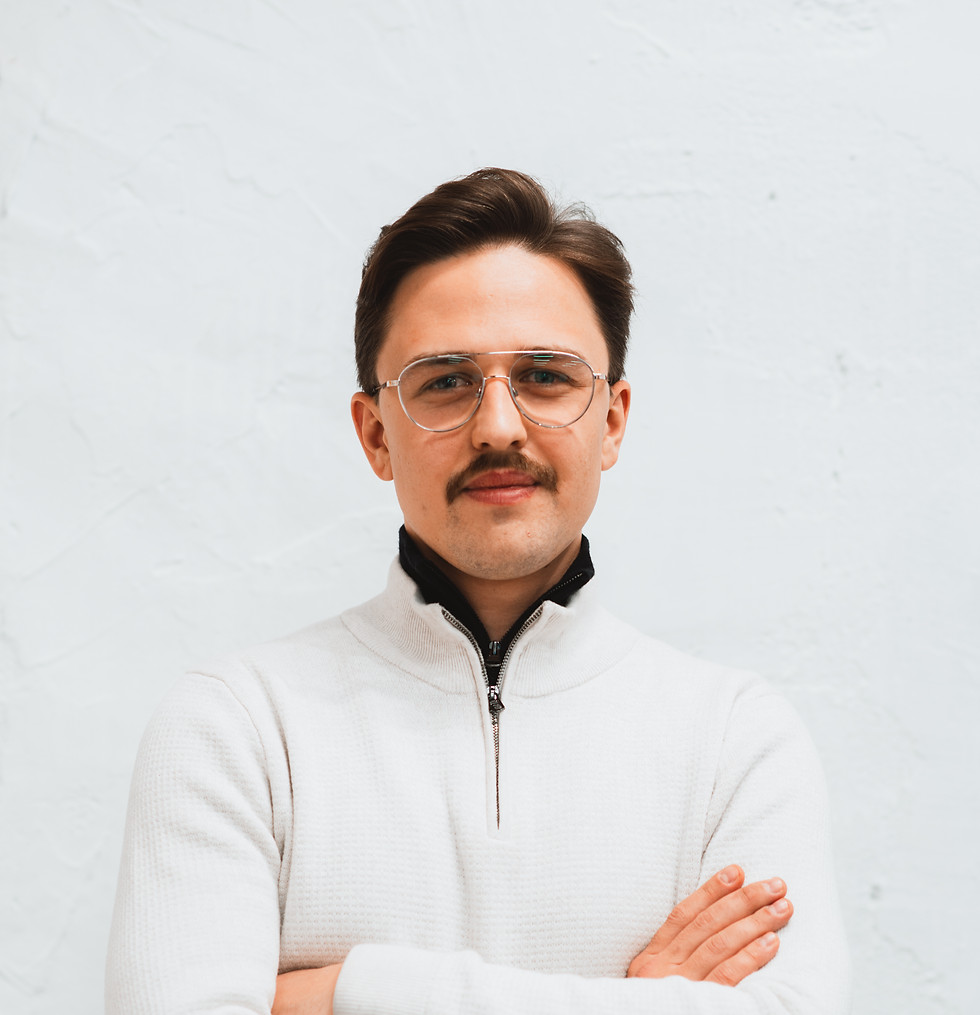
Oleksandr Anisimov
Researcher in spatial planning at Aalto University and Kharkiv School of Architecture, Orhaniser of symposium
Doctoral researcher in spatial planning and multi-level governance at Aalto University, School of Engineering.
Co-author of reports and thematic papers on housing, land use and spatial planning in Ukraine commissioned by UN-Habitat, PBL Netherlands, RMIT University and Aalto University.
Organiser of the annual international symposium ‘Rebuilding a Place to call home’.
Head of New Housing Policy NGO (Ukraine) and consultant for Ro3kvit: Urban coalition for Ukraine
Research fellow at Kharkiv School of Architecture.

Martynas Marozas
Urban designer and planner, city Development moderator
Martynas specializes in complex transformation strategies for existing cities, actively involving local businesses, residents, and various interest groups. He holds a Master's degree in Urbanism from Delft University of Technology, he also holds a Bachelor's degree in Architecture from Vilnius Gediminas Technical University. Currently holds an associate professor position in Kaunas university of technology, also lectures in Vilnius University.
As the Director and Urbanist at MB “MMAP”, Martynas works with projects that demand an interdisciplinary approach and innovative solutions. Martynas' prior international experience includes working on large-scale urban projects and development processes, including contributing to programs like the Participatory Slum Upgrading Programme (PSUP) for UN-HABITAT while at "We Love the City" in Rotterdam.
His work, such as coordinating recommendations for Ukrainian cities on the "Holistic renovation of multi-apartment buildings" as part of the UREHERIT project, is particularly relevant to the challenges addressed in Urban Hack, connecting his expertise in transforming post-Soviet urban structures with contemporary needs for sustainable development and housing solutions.

Elina Liiva
Architect, Researcher at Estonian Academy of Arts,
Curator of the Estonian Pavilion at Venice Architecture Biennale 2025
Elina Liiva is an architect, researcher and educator currently pursuing doctoral studies at the
Estonian Academy of Arts (EKA). As a junior researcher and architect for the LIFE IP BuildEST project, her work focuses on sustainable renovation strategies and their implications for urban planning. She is also a member of the Housing Workgroup at the Estonian Association of Architects, where she contributes to the development of affordable housing solutions. Elina is actively engaged in community-led projects, integrating participatory approaches into her architectural practice.
Elina is one of the curators of the Estonian Pavilion at the 19th Venice Architecture Biennale. Titled “Let me warm you”, the exhibition explores renovation paradoxes in mass housing neighbourhoods. It examines the architectural value of current solutions while diving into the renovation process itself, emphasising the human relationships that shape and sustain it.

Ruslan Antonenko
Architect, Urbanist
Ruslan Antonenko is an architect by education with a M.Arch Degree at UCLA. He has worked at KCAP Architects & Planners in Rotterdam, NL, contributing to urban development projects as in NL and worldwide. Currently, Ruslan is part of Ro3kvit, an urban coalition focused on rebuilding Ukraine.
He is passionate about designing cities that are comfortable, safe, and ecologically diverse, integrating natural elements into urban environments to foster vibrant and inclusive communities.
Ruslan leads projects that focus on sustainable urban development, the integration of natural and social systems, and the creation of vibrant public spaces that promote inclusivity and resilience.
What to expect?
2 Days
+ pre-event the day before
5 Teams
participants from different backgrounds
5 Mentors
every team has its international or local mentor
1 Urban Problem
dealing with 1 complex urban challenge
Interesting discussions
socializing during and after workshop
Location context
Lviv City Territorial Commune
Lviv is a historic city in western Ukraine with a rich and long history that has created a multi-layered urban landscape unique to Ukraine and the region. The city has retained many characteristic features of different eras, which can be clearly read in the urban fabric and illustrate different urban planning approaches and stages. Due to its location, Lviv has always been an important logistical point and a center of cultural and political life.
Now, in the context of the war, the city has once again become an important hub for the country, responding quickly to changes and challenges, entering the next stage of its development.
Urban Hack Site
The hackathon area is located in the Sykhiv district of Lviv, one of the largest and most densely populated residential areas of the city. Over the past decade, the district has experienced active urban development, including new residential complexes, improved public transport infrastructure, and the growth of local businesses. The neighborhood surrounding the site is well-connected, with a tram stop and a large local market located nearby, serving as key hubs of daily activity.
The multi-storey buildings around were originally constructed as part of a unified residential complex during the Soviet period. Public extracurricular education facility was built in the late 1980s as well. Like many similar buildings in Ukraine, they suffer from outdated construction standards, poor insulation, and high energy consumption, resulting in financial burdens for residents and increased environmental impact. Despite recent urban improvements in Sykhiv, the buildings around have not yet been renovated.
Registration for Participants
Urban Hack in Lviv, 14-15 June 2025
Participants will be selected by organizers after the deadline
Deadline for participants: 26.05.2025
Registration for Team leads
Urban Hack in Lviv, 14-15 June 2025
Team leads will be hand picked and there will be 2 leads coming from Estonia, 2 leads from Ukraine and 1 from Lithuania. Team lead position is paid.
Deadline for team leads: 13.05.2025
Results


Urban Hack Lviv focuses on the topic of “Holistic Renovation of Modernist Housing” and will have a closer look at a microdistrict in Sykhiv district in Lviv. The microdistrict is located between Chervonoi Kalyna Avenue and Oleksandra Dovzhenko Street.
Renovation is a larger topic that almost every country in Europe is currently tackling. With Holistic Renovation of Modernist Housing we are looking for a comprehensive approach to housing renovation that considers various aspects such as spatial quality, social impact, process quality, economic impact, technical quality, and environmental impact, so that amid rushed need, we would not lower the quality of our neighborhoods. With this topic, we aim to look for solutions to create livable, sustainable, and thriving communities.
Holistic Renovation of Modernist Housing aims to meet contemporary standards of comfort, energy efficiency, safety, and social use, while respecting and preserving their architectural integrity. It involves looking beyond just superficial fixes and considering the building as a whole: its design, structure, systems, and its role in the community. This topic is also a research project lead by Architects Association Lithuania in collaboration with Kharkiv School of Architecture that is investigating roadblocks regarding renovation and hoping to offer a toolbox of solutions.
In the neighborhood in focus (https://maps.app.goo.gl/jH31c4X6Bcp6zxMx9) are a lot of challenges specific to the area that are quite common in typical soviet mass produced housing areas. The main challenge is the lack of feeling of ownership created by the vast area of public open space with no private or semi private zones. So how do we create a feeling of ownership and community in no man's land? Other challenges in the area are lack of activities or meaning given to certain spaces, no universal design and accessibility, poor infrastructure for kids and low feeling of safety.
We believe that if residents, municipal officials, and interdisciplinary teams are involved in modeling the renovation of a modernist mass construction neighborhoods, it is possible to create a realistic foundation for a municipal program to upgrade outdated housing. The hackathon will serve as a lab for developing a first draft framework adaptable to different funding sources and various levels of intervention.
The Urban Hack had 5 teams that looked at the renovation process challenges from different angles, next to visual ideas. All teams are dealing with one umbrella task of renovation challenges, but every team can choose a more specific viewpoint. Our approach is view the issues from the perspective of the residents, homeowners association, local municipality, financial means and partnerships with donors. With this Hack we aim to empower everyone to take control over their own environment and think outside the box of restrictions and can’t do’s.


%20(2).png)
.png)


